COPIED
7 mins

An almost forgotten history

Born in Sligo in 1870, Eva Gore-Booth was an Irish poet, theologian and dramatist, as well as a committed suffragist, social worker and labour activist. Sarah Creighton Keogh traces through her often overshadowed story, and her involvement with the Urania journal.
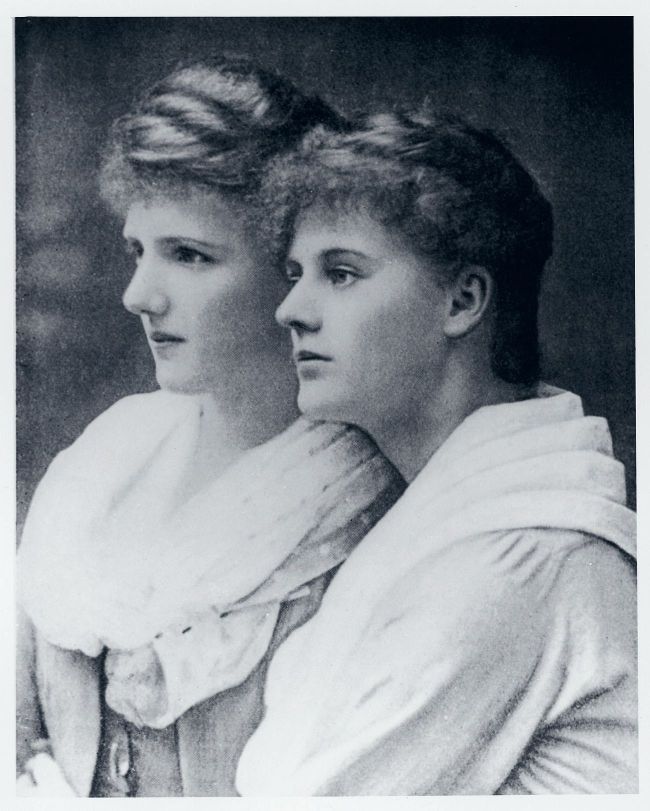
Photo from Wikimedia Commons.

In photographs, Eva Gore-Booth often appears impossibly serene. High collars, soft eyes, an undeniable calm. It is easy at first glance to mistake her for exactly what generations of Irish historians turned her into: a gentle poet standing politely in the enormous shadow of her older sister, Constance Markievicz. But Eva Gore-Booth spent much of her life involved in something far more radical than Irish history has comfortably known what to do with. In Manchester and London, among suffragists, writers and queer intellectuals, she became part of a remarkable network imagining entirely new ways of living. At the centre of that world sat a curious little journal called Urania, filled with poetry, newspaper clippings, political reflections and stories gathered from across the globe.

First published in 1916, Urania circulated privately in extremely small numbers, often shared by hand or through trusted networks rather than sold publicly.

Surviving copies of the journal are hard to come by; some are now held in archives such as the British Library and the LSE Women’s Library, reflecting its limited original circulation.

For decades, Irish history struggled to know where to place Eva Gore-Booth. Markievicz, wrapped in revolutionary praise, became iconic. Eva remained blurrier. Yet the sisters were not as politically distant as they are often portrayed. Both distrusted hierarchy. Both were drawn toward social revolution. Both rejected the narrow expectations placed upon women of their class.

They simply travelled toward different versions of freedom. Where Markievicz marched through streets in military uniform, Eva moved through industrial corridors organising women workers, campaigning for suffrage and building intellectual communities that questioned not only political systems, but social conventions themselves.

Much of that work unfolded alongside Esther Roper, the English activist and writer who would become Gore-Booth’s lifelong partner. Together, they formed one of the most important yet historically under-acknowledged partnerships in Irish and British feminist history. Their relationship shaped not only their politics but the emotional and intellectual atmosphere around Urania itself.

The publication emerged during the turbulence of the First World War, a period when nationalism, militarism and rigid social order were hardening across Europe. Against that backdrop, Urania felt defiantly unconventional. It rejected war, hierarchy and social conformity with an unusual mixture of seriousness and optimism.

At the centre of its orbit was one of the most fascinating figures of the early 20th century: Irene Clyde. Born Thomas Baty, Clyde was a lawyer, novelist, scholar and deeply original thinker whose ideas profoundly shaped the publication’s worldview. Writing under the pseudonym ‘Theta’, Clyde had already founded the Aëthnic Union in 1911, a group dedicated to challenging restrictive ideas around sex and social identity. But to reduce Clyde merely to a set of political ideas misses what made the figure so compelling.

Clyde was a barrister writing fantastical novels. A legal scholar questioning social structures. A person who moved through Edwardian society while refusing its assumptions about identity and behaviour. Clyde’s writing carried intellectual sharpness and imaginative possibility, a combination that would become central to Urania.

The journal never functioned like a conventional political publication. It was too eclectic for that. Its pages drifted between poetry, international news clippings, historical anecdotes, essays and reports of lives lived beyond ordinary social expectation. Some issues, for example, reprinted press reports of individuals living as the “opposite sex,” as evidence of social possibility. Readers encountered stories about women living independently, same-sex companionships, androgyny, activism and literary women whose lives resisted easy categorisation.

Reading it now feels oddly intimate, like opening a box of carefully preserved fragments from a hidden intellectual history. At the front of every issue sat the journal’s now-famous declaration: “There are no ‘men’ or ‘women’ in Urania.”

Dr Sonja Tiernan, author of Eva Gore-Booth: Irish Radical Poet, Rebel and Reformer, whose groundbreaking research helped restore Eva Gore-Booth to Irish queer history, believes Gore-Booth was central to shaping the journal’s intellectual direction.

“Many articles note specifically that Eva was the founder and driver behind establishing the journal Urania,” Tiernan says. “Her writings are often dispersed in the pages, so we can deliberate that Eva was central to the intellectual direction.”

That direction emerged not only through politics but through curiosity about human lives that existed outside convention. Across her poetry, essays and political writings, Gore-Booth repeatedly returned to people who crossed social boundaries or refused expected roles.

“There are others at this time who advocate for a genderless world and explain the possibility through esoteric religion such as theosophy,” Tiernan explains. “From researching Eva’s full body of writing, and there are 19 volumes, she is attempting to highlight that many people cross gender and sex constructs in their daily lives.”

Importantly, Urania did not approach these subjects with the clinical distance common to many early 20thcentury discussions about sexuality or identity; instead, its editors drew extensively on contemporary sexology and medical literature, including reports on transition-related medical interventions, hormonal research, and cases of people living outside conventional gender categories. Rather than treating these subjects as merely pathological or sensational, Urania frequently presented them as evidence that rigid distinctions between male and female were socially constructed and historically unstable.

Much queer history survives in fragments shaped by secrecy, fear or criminalisation. Urania contains those realities too. It circulated privately for a reason, but it is also full of pleasure. Pleasure in intellectual rebellion. Pleasure in friendship. Pleasure in discovering evidence that humanity has always been more inventive than rigid social systems allow.

That sense of collectivity mattered enormously. The journal’s contributors formed a loose but deeply connected network that included Gore-Booth, Roper, Clyde, Dorothy Cornish and Jessey Wade, among others. They were writers, reformers and campaigners. Many had backgrounds in suffrage activism, but Urania pushed beyond conventional feminist politics of the era.

While many suffrage organisations focused primarily on voting rights, the Urania circle questioned broader structures of power and expectation. They opposed militarism and criticised the assumptions attached to masculinity, nationalism and empire.

Tiernan believes the publication’s contributors genuinely imagined a world less constrained by rigid social categories. “To Eva, this is simply her goal toward what she views as an ideal world,” she says, “one where people are not constrained by mainstream constructs.”

Reading that now, from a contemporary perspective, feels surprisingly moving. Ireland has changed dramatically in recent decades. Queer life is no longer forced entirely into secrecy. Conversations around identity, partnership and selfhood have entered mainstream culture in ways the Urania circle could scarcely have imagined. And yet many of the publication’s questions still resonate: Who gets to define normality? What kinds of lives are erased by official history? How much human possibility is lost when societies insist upon rigid ways of being?

What makes Urania remarkable is that it approached those questions not with despair but imagination. And perhaps that imagination explains why Eva Gore-Booth herself became so easy to sideline historically. As Tiernan notes, her relationship with Esther Roper was frequently flattened by earlier scholars into the safer language of friendship.

“Partly, she was overlooked because she was overshadowed by her older sister Markievicz,” Tiernan says. “But ultimately, I place much of the blame on homophobic embarrassment.”

That embarrassment shaped Irish historical memory for generations. Queer relationships were softened, hidden or rendered ambiguous. Radical ideas became footnotes. Intellectual networks disappeared from public consciousness altogether.

When Tiernan began researching Gore-Booth, she discovered just how scattered and neglected the archive had become. “There was, in fact, very little known about her,” she says. “It took years of research to source her personal papers, unpublished writings and other details.”

What has emerged through that recovery is not simply a forgotten suffragist, but a profoundly original Irish thinker whose work reached far beyond conventional political reform. And at the centre of that rediscovery sits Urania, an eccentric utopia still startlingly alive.

There is something deeply comforting in knowing that people like Eva Gore-Booth, Esther Roper and Irene Clyde existed when they did. Not because they provide perfect blueprints for contemporary politics, nor because their ideas map neatly onto modern language, but because they remind us that queer history has never been only a history of suffering. It is also a history of creativity. Of intellectual risk. Of friendship networks and private journals and strange, ambitious dreams about how the world might be reorganised. The contributors to Urania believed queer individuals could live more freely than society allowed them to imagine. More than a century later, their journal still carries that sense of possibility.

This article appears in 393

Go to Page View
This article appears in...
393
Go to Page View
gcn
FROM THE TEAM
Keep up to date across our socials: @gaycommunitynews
Reflections on Pride
The National LGBTQ+ Federation (NXF), publishers of GCN, are pleased to have the opportunity to once again update readers on recent developments in the advocacy and policy space.
ROAST BATTLE ROYALE
Following last year’s record-breaking Roast of Panti Bliss , a night of comedy, fundraising, and one of the Abbey Theatre’s fastest-selling shows to date, GCN is giving the people what they want and bringing the Roast back this Pride, bigger and bolder with a fresh, hilarious cast and a brand-new format. Please welcome to the stage, GCN’s Roast Battle Royale !
FRIEND OR FOE?
What do you think of when you hear the words best friend, partner or family? Most of us probably imagine our real-life counterparts, but as Anna Vichtova points out, a rising fraction of society sees things very differently.
A placetobelong
As part of GCN and Belong To’s ongoing collaboration to platform a new generation of LGBTQ+ voices in Ireland, Séamus McDonnell highlights the importance of having physical community spaces.
RUN WITH PURPOSE
The Irish Life Dublin Marathon returns in 2026, and GCN is recruiting a new team of runners to take on the challenge, with only one spot still available! Five dedicated individuals have already been selected, prepared to take on the 42.2km race in support of Ireland’s free, independent LGBTQ+ media.
DRIVING THE CONVERSATION
Klinefelter syndrome, or XXY, is a common but largely unknown genetic condition in which a baby is born with an extra X chromosome. Often considered part of the intersex spectrum, Alice Linehan spoke to Gareth Landy, a campaigner passionate about raising awareness.
Bi us, for us
For years, ANNA Kerslake longed for a place that celebrated and normalised bisexuality. In 2023, she took matters into her own hands and created the BI-Monthly social group.
A MOTHER’S LOVE
As anti-trans rhetoric continues to appear in parliaments, courtrooms, and public spaces, what the community needs now more than ever is allies. Mammies for Trans Rights are a shining example, and Chris Rooke spoke to one of the co-founders about their essential work.
READ WITH PRIDE
Children’s Books Ireland is proud to champion diverse and inclusive storytelling that best reflects the vibrancy and diversity of modern Ireland. Each year, the team proudly curates a collection of LGBTQ+ books for readers aged 0 to 18 in the Read with Pride guide, 10 of which are spotlighted here.
Save the Date!
Empowering our identities
Earlier this year, ShoutOut released a new resource created by and for LGBTQ+ neurodivergent people. Recognising the importance of this work, Emmet Mc Ardle spoke to the team to find out more. Photos by Salvador Gutiérrez .
TEACHERS' GROUP
Art is for Everybody
There is a joke shared by me and
Send love
Sky
Meditations on labour
Shanaia Kapoor sat down with the Wexford-native to discuss everything from queerness to class, and the crux of meaning-making when you’re good with your hands.
Recovery as resistance
As society continuously perpetuates several harmful beauty standards, many people feel under pressure to control their bodies in different ways. Having previously dealt with an eating disorder, Megan Devaney explains how recovery can be a powerful form of resistance.
THE SEARCH FOR SAFETY
From June onwards, international protection processes in Ireland are undergoing serious reforms with the enactment of the International Protection Bill 2026, giving effect to the measures of the European Union Migration and Asylum Pact. Oisín Kenny speaks with community groups about the potential impact of this act, the growing disconnect between wider public attitudes and populist political movements, and the need to combat misinformation amid shifting social, digital and political landscapes.
TAKING ACTION
With decade-long waiting lists, invasive assessments and refusals of treatment, trans healthcare in Ireland is broken, and these issues are symptoms of an outdated, centralised, pathologising system. To fill the void in providing life-changing care, the trans community and healthcare professionals joined forces to create Kindred Clinic Cork, Ireland’s first peer-led trans health service pilot. Beatrice Fanucci spoke to the team to find out more.
LOVE IN A COLD CLIMATE
This August, in a town where polar bears roam wild and the dark season is months long, Longyearbyen Pride returns for a three-day celebration in the Norwegian High Arctic. To find out more about the world’s northernmost Pride, Charlie Hayward spoke to the team in charge.
RESIST & PERSIST
In 2025, dykes of all diversities, alongside those who love them, took back the streets of Dublin for the first time in over 25 years, and filled them with protest, power and joy. Now, they’re ready to do it all again, and Chairperson Alice Linehan shares what to expect.
MARCHING ON ON ON ON ON
Bodily autonomy has always been a core demand and theme for Trans & Intersex Pride Dublin. As Founder Ollie Bell points out, the group was formed in 2018 after the historic ‘Yes’ vote to repeal the Eighth Amendment, the constitutional ban on abortion.
ONE STORY MANY VOICES
Dublin Pride will host its annual festival this June, with a fabulous range of events taking place all across the city. The organisation’s Creative and Cultural Lead, Colm Molloy , shares further insights into the theme, branding, grand marshal and events for 2026.
A new approach
Following the liquidation of the company behind Cork Pride in 2025, a community group, Cork Community Pride, emerged to take the reins, centring grassroots organising and a community-based approach. Sarah Fitz spoke to one of the organisers, Niamh Kennedy, to hear about the plans for this year’s festival.
PRIDE CALENDAR 2026
The 2026 Pride season is well and truly
FAB FORTY
As The George marks its 40th anniversary, Sarah McKenna Barry caught up with some of the drag artists and DJs that call the iconic LGBTQ+ venue home, as they reflect on the bar’s long and fascinating history.
DO IT FOR THE DANCE
Mother Pride Block Party returns to Collins Barracks this June with a fabulous two-day celebration. Ahead of the unmissable event, Ailo James Kerr spoke to three of the lineup’s most exciting local DJs.
PLEASURE & POLITICS IN THE PIT
Pride parties are nothing without electrifying artists, and that’s the best way to describe the force of nature that is Peaches. Brian Dillon spoke to the Canadian hitmaker before she makes her return to Dublin with a DJ set at Mother Pride Opening Party, just weeks after her show at The Academy.
FINDING OUR RHYTHM
When two friends found a gap in Dublin’s nightlife scene for queer people of colour, they decided to create Aphrodisiac, a unique space championing representation and acceptance. Michaiah Johnson spoke to Co-Founder Jhonnie about the organisation, and why it is so special for so many people.
50 YEARS AT FULL THROTTLE
For five decades, Dykes on Bikes have used their presence as a marker of bravery, visibility, diversity and empowerment. Nicole Lee charts some of the group’s history and chats to the Melbourne chapter about the work they do.
Documenting care _in Dublin’s queer nightlife
Keelin O’Shea is a Dublin-born and Dublin-based documentary
Discover hidden histories and fresh perspectives!
THE BEAUTY OF OVERCOMING
James Mac is an internationally acclaimed makeup and drag artist, photographer, and hairstylist, with a background in sports and a passion for advocacy, making him quite the Renaissance human. Conor O’Doherty spoke to James while he was home in Laois, surrounded by signs of his heritage and upbringing.
your trash my treasure
SMUT Press is a London-based, Irish-run, queer publishing project and party platform. In coincidence with the release of their latest publication, Cruising Archaeology II: Eurotrash , Alice Linehan sat down with founders Jack Scollard and Jordan Hearns to learn more about their work.
Pride, pleasure & protection
Pride is a time of connection, celebration and community. As Pádraig Burke notes, for many, Pride also includes travel, nights out, meeting new people, reconnecting with chosen family, intimacy and sex.
PUNK IN PRACTICE
In April 2026, Jack Haven, Mina Walker and Peter Nolan Smith travelled to Dublin for the European premiere of their film October Crow at the Trans Image/Trans Experience (TITE)Festival. Programmer and Guest Co-Ordinator Liadán Roche interviewed the trio after the screening and during a separate meeting in Outhouse, to learn more about the production and their filmmaking ethos.
Tender Migrations
Queer Spectrum Film Festival returns in 2026 to showcase migrant and QPoC journeys through desire, transition and healing. To tell us more, Founder, Director and Programmer Pradeep Mahadeshwar dives into the programme.
Ag foghlaim le chéile
In July 2024, Ireland’s first Gaeltacht camp for LGBTQ+ adults launched in Cléire, off the coast of Cork. Spearheaded by AerachAiteachGaelach, the group’s director Eoin Mc Evoy is on hand to tell us more.
[Music Makers]
Electronic music has been a staple in LGBTQ+ communities across the globe since its inception. After all, as Nicolas Prince notes, the genre and many of its subgenres were pioneered by queer people, with creation stories rooted in the underground Black and Latin queer communities.
Directory
Dublin & The East Acting Out Performance group
Directory
Cork, Kerry & The South Choral Con Fusion
An almost forgotten history
Born in Sligo in 1870, Eva Gore-Booth was an Irish poet, theologian and dramatist, as well as a committed suffragist, social worker and labour activist. Sarah Creighton Keogh traces through her often overshadowed story, and her involvement with the Urania journal.
A CAUSE FOR CELEBRATION
As she turns 80, Ailbhe Smyth hasn’t lost any of her political agency and unquenchable desire to right social injustice wherever she sees it. Tonie Walsh recently sat down with the activist to take stock of a full and noble life.
THE FRONT LINES OF RESISTANCE
According to the Global Peace Index, Ireland is the second safest country on the planet. This is largely thanks to our longstanding commitment to military neutrality; something many of us consider to be a defining trait of our national identity. But as Kelly Earley points out, this could all be at risk.
The INMO wish you a Happy Pride 2026
FOR ALL YOUR CEREMONY NEEDS SEE YOU AT PRIDE ACROSS IRELAND!
FIGHTING FOR OUR FAMILIES
I t’s been 11 years since Ireland voted
Looking for back issues?
Browse the Archive >

Previous Article Next Article
393
CONTENTS
Page 128
PAGE VIEW