Music Makers
Electronic music has been a staple in LGBTQ+ communities across the globe since its inception. After all, as Nicolas Prince notes, the genre and many of its subgenres were pioneered by queer people, with creation stories rooted in the underground Black and Latin queer communities.
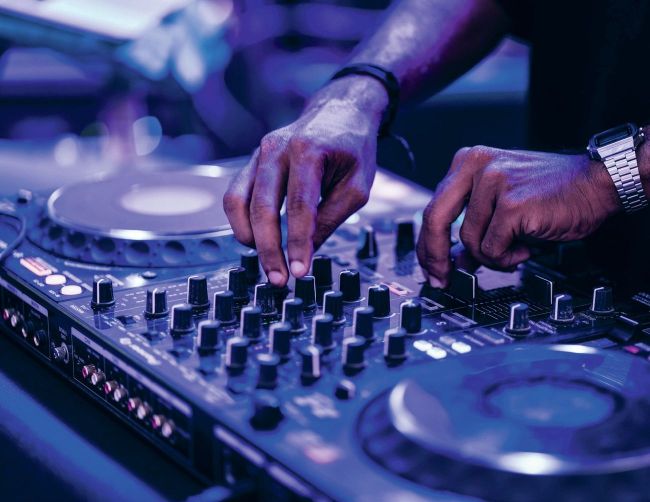
Genres of music that we now know as disco, house, and many others, were being invented as the 1960s came to a close and as the 1970s geared up to introduce an unparalleled cultural shift alongside the monumental Stonewall riots and queer revolutions alike. Discothèques were brought to the US from France in 1960, and despite being known more simply as ‘clubs’ today, they lent their name to a timeless genre of music. Disco music gained significant traction in the late ‘60s, thanks in no small part to the United States’ growing counterculture at the time. In the wake of the ever-unpopular Vietnam War and the liberating success of the Civil Rights Movement, American society was changing rapidly. While the rebellious hippies faded away around the turn of the decade, utilising music as another form of rebellion was only getting started.
New York was the centre of disco clubs, with venues like Studio 54 still holding renown long after the genre’s heyday. Two local DJs in the scene were friends Larry Levan and Frankie Knuckles, both of whom were Black gay men who were creating music that had never been heard before. Through the exploration of synthesisers, drums, and experimental editing, the pair were revolutionising the nightlife scene. Later in the ‘70s, Knuckles brought his musical brilliance to Chicago, the heart of America’s Midwest. There, he became the resident DJ at the
Warehouse, a new club rapidly rising in status.
The Warehouse was one of the very few clubs in the city that offered a welcoming atmosphere for queer people of colour. Knuckles, with his new sound and supportive patrons, popularised a genre that would ultimately be named after the drab building that housed their effervescent community. House music stood in direct opposition to the largely racist and homophobic ‘disco sucks’ slogan, as it celebrated and uplifted the voices that the American majority so desperately wanted to silence.
Throughout the ‘80s, different forms of electronic music were garnering attention around the world, most notably in Europe with the rise of acid house in the UK. Not only were disco and house pioneered almost exclusively by LGBTQ+ people of colour, but their music drew largely from pre-existing genres like funk, soul, and Latin music, and developed alongside the R&B and hip-hop genres that are integral to communities of colour today.
However, the difference was that the European clubs that played electronic music were mostly attended by white, and frequently heterosexual and cisgender, patrons. The introduction of white audiences to electronic music is what thrust rave culture into the mainstream, with much of the instrumental work of queer people of colour becoming commodified by the same people who demonised it just years prior. While the LGBTQ+ community suffered greatly during the height of the AIDS epidemic, the masses danced to their music and turned their backs on their struggling neighbours. The true creators of the global phenomenon, legends such as Knuckles and Levan, were slowly being erased by the general public.
Electronic music has also played an immeasurable role in queer ballroom cultures, which can be traced back to the drag balls of the 19th century. One of the world’s first documented drag queens, William Dorsey Swann, was a formerly-enslaved Black man who lived in Washington, DC, and he frequently hosted secret gatherings for other queer people like himself. These drag balls continued in America throughout the ‘20s and ‘30s, and though they were racially integrated long before most of the country, Black patrons created their own balls after experiencing racism in what was supposed to be their safe space.
Thus, the Black and Latin ballroom scenes grew significantly in the ‘60s and ‘70s thanks to the creation of houses by drag queens Crystal and Lottie LaBeija. Ballroom culture has popularised many terms and symbols that tend to be synonymous with modern queer culture, such as voguing, drag, and, of course, electronic music. At these balls, music shapes the atmosphere and a variety of genres can be heard playing, including disco and house. The relatively fast beat of electronic music keeps the energy up and the crowds lively, a key component of underground balls which were formed out of the resistance and rejection of social regression. Electronic music was born out of a need to celebrate queer joy in the face of adversity and oppression. Even as more countries continue to expand LGBTQ+ rights, the fight for equality is far from over, especially in queer communities of colour.
Though history continues to work against the queer visionaries that began revolutions with their music, their legacies persist, not only in their art, but in the people who continue to honour their achievements in everyday life.