THE SEARCH FOR SAFETY
From June onwards, international protection processes in Ireland are undergoing serious reforms with the enactment of the International Protection Bill 2026, giving effect to the measures of the European Union Migration and Asylum Pact. Oisín Kenny speaks with community groups about the potential impact of this act, the growing disconnect between wider public attitudes and populist political movements, and the need to combat misinformation amid shifting social, digital and political landscapes.
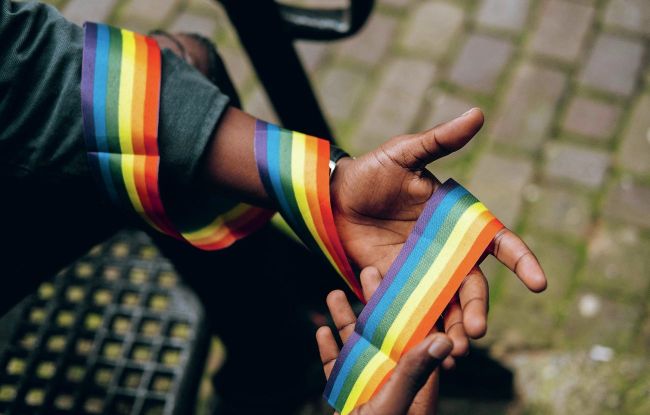
Photo by Anete Lusina.
The International Protection Bill 2026 introduces a major overhaul to current international protection processes, such as mandatory border procedures, faster decision-making processes, and tighter deadlines for appeals. With these significant reforms to Irish law, community groups and advocacy organisations are raising concerns about the lack of clarity on how the Bill safeguards human rights and core equality principles, potentially paving the way towards exacerbating an already dehumanising and traumatising system.
Many LGBTQ+ people experience varying forms of emotional and physical trauma under their home countries’ hostile and oppressive social and political climate. Hoping for safety, they seek out international protection. Oisín O’Reilly, CEO of Outhouse LGBTQ+ Centre and current Chair of the Board of Directors at the Irish Refugee Council, said, “For many of the people that I’ve spoken to, they see Ireland as a beacon of human rights and equality, they see it as a very liberal, open society. I think the phrasing of our national welcome ‘Céad Míle Fáilte’ is something that has been attractive to people in feeling that they’re more likely to maybe get a fair shot, or empathy, compassion and understanding, than they might in other countries.”
Reforms to international protection laws in Ireland have been criticised for placing greater value on efficiency above the lived experiences of those seeking protection from life-threatening persecution, discrimination, and violence. Reflecting on the International Protection Act 2026, Oisín stated, “It completely ignores the reality for LGBT people. Credibility assessments in LGBTI+ claims are often highly sensitive and context-specific, and the opportunity to be heard in person can be crucial where there are misunderstandings or incomplete disclosure occurred at first instance.”
Advocacy organisations and community groups have raised one alarming concern regarding the Bill’s lack of definition around legal counselling or clarification on who will provide it. This throws into question an applicant’s entitlement to legal advice and representation at each stage of the process. Oisín speaks to the wider ramifications around this uncertainty: “Coupled with restricting the right of access to the courts for judicial review is a wholesale degrading of the rights of individuals, and that’s something that we should all be very worried about. Our right to go to the courts to have a judgment against the power of the State is something that is very important.
“Homosexuality wouldn’t have been decriminalised, and gender recognition wouldn’t have happened without our ability to go to the courts. Norris v. Ireland and Foy v. Ireland – these are critical cases, and both of these relied on judicial review and the European Convention on Human Rights. Our rights as queers wouldn’t exist without them, so we should be very worried that the rights of another minority are being attacked,” he continued.
Community groups and advocacy organisations are familiarising themselves with the International Protection Bill 2026 to ensure they can best support new applicants amid these changes. However, the lack of clarity around certain aspects of the Act means that learnings will emerge on a case-by-case basis. Mariem Ben Chattouh, key worker to LGBTQ+ international protection applicants at LGBT Ireland, shared, “We likely need to monitor the implementation of this new Act and document any issues or raise concerns that emerge. And also advocacy groups need to push for adjustment, policy change and legal challenges where aspects of the new system negatively affect the rights of applicants.”
Mariem went on to state, “The concern within the civil society is that part of the Act that related to the Irish legislation was introduced very quickly without sufficient consultation or clarity on how some measures would operate in practice. Ongoing monitoring, reporting, and advocacy will be essential to ensure that LGBTQ+ applicants are treated fairly and can access appropriate support. And so, as a community organisation, [we] will continue to play the important role of providing safe spaces, peer support, and community connection for LGBTQ+ people seeking international protection here in Ireland.”
In 2022, LGBT Ireland and the Irish Refugee Council published Believe Me or Not But I Am Who I Am, a research project exploring the experiences of LGBTQ+ applicants proving the credibility of their gender and/or sexual identity in the Irish international protection process. 10 participants spoke about their experiences and, according to the report, “Some talked about not feeling they had all the words or the language to adequately explain and express who they are. Participants expressed the view that they felt most interviewers would not have had any awareness of this level of internalised homophobia happening inside them, noting that the interviewers themselves were not LGBTI+, did not share similar life experiences and likely assumed that those being interviewed should be feeling safe now that they were in Ireland some time already.”
Along with the uncertainty around legal counselling, many community groups and advocacy organisations have raised concerns about the drastic reduction in processing timelines, particularly considering the sensitive nature of LGBTQ+ applicants seeking protection. Mariem spoke to the possible impact of shorter timelines and how it further isolates those seeking international protection: “The short timeline may also reduce the opportunity for applicants to access NGO support and community supports. And in particular, how we think this might impact LGBT applicants [is] because LGBT international protection applicants require a little bit of extra time to feel safe and ready to disclose their sexual orientation or identity.”
Contrasting the International Protection Bill’s potential isolating impact on those undergoing these processes, wider public sentiment strongly favours integration over exclusion, according to the Hope and Courage Collective’s Ireland in Focus 2025: Mind the Gap report. This major new report analyses key developments, trends and events across 2025 in comparison to 2024 to illustrate the growing disconnect between inclusive public attitudes and political narratives increasingly informed by far-right framings. One key finding from the report outlines a 77 per cent majority who believe people seeking international protection should be supported to become part of the communities they live in. Speaking on the findings, Edel McGinley, Executive Director of the Hope and Courage Collective, shared, “I think overall, [the findings present] a hopeful story and hopeful statistics that kind of show the direction of travel of society. And I know it can be hard to believe sometimes when everything is on fire and burning around us. But actually, what the data tells us is that when things were on fire, when things were burning, that kind of approach really moved the majority of people away from that hateful agenda, not towards it.”
According to the report, far-right actors have not secured consistent electoral gains, yet their impact can be felt across agenda-setting and discourse shifts. This particularly relates to their framing on migration, asylum, and housing becoming more present in mainstream political narratives, further exemplifying a growing disconnect between the public’s increasingly inclusive stance and populist political movements.
Reflecting on this, Edel commented, “A lot of the scarcity and grievance framing closes space to the framework and the conversation around more humanitarian, humane ways of supporting people. So some of this is intentional. Some of it’s not. We’re not saying all of it is intentional in any way, shape or form. However, narrative matters and how we speak about things matters. There needs to be more political rigour in terms of our narrative discipline.”
This significant reform to international protection laws raises serious concerns across community groups and advocacy organisations around the Bill’s lack of clarity and consideration for lived experiences. As such, looking ahead, it becomes vital that communities continue showing up for one another, acting together, and supporting each other through a changing political and social landscape.
This article is part of GCN’s new Amach le Bród (Out with Pride) series, to combat anti-LGBTQ+ misinformation and platform underrepresented voices. The project was funded by the Coimisiún na Meán News Reporting Scheme.