Art is for Everybody
There is a joke shared by me and some others in Derry: “It’s a horrible time to be working in the arts and to not want to move”. Whether to Belfast, Dublin, London or beyond, the sentiment remains. There is a need which is not being filled where we live.
The Arts Council Northern Ireland receives the lowest funding per capita of the entirety of the UK. The funding for the rest of the UK is as follows as of 2024-2025 according to Equity: £6.47 per capita annually for Arts Council England, £20.73 per capita for Creative Scotland and £10.85 per capita for the Arts Council of Wales. Funding per capita for the Arts Council of Northern Ireland (ACNI) for this period cannot be found, but the funding per capita in 2023 was estimated to be £5.07 by ACNI themselves, with further cuts having taken place since that number was reported.
It was estimated at this time by ACNI that the funding of our counterpart across the border, the Arts Council of Ireland, was £21.58 per capita. While cross-border funding streams are available, they do not meet the level of demand that exists in the country, leading to fierce competition between freelancers and organisations alike for even small pots of money.
Furthermore, with £380,974 going to Derry’s arts organisations in 2024-25 compared to £3,083,721 going to Belfast in the same year, and only 12 organisations being funded in Derry compared to 60 in Belfast, according to ACNI’s Annual Funding Programme, it is clear that even despite our shared struggles, a regional disparity exists in the funding landscape. This is even before addressing the regional disparity that exists for areas outside of either city, in towns that receive little to no funding. Ignoring the major cities of Derry and Belfast, only 12 organisations are funded, receiving £406,687 between them.
As creatives here, we see many of our peers fleeing to other cities for better lives, better funding and more stable scaffolding for their crafts. On the flip side, many of our contemporaries also leave to find more stable careers where possible, hoping to make art a side hustle should they have the energy. For those of us who do stick around, our space is usually only able to exist through the precarious kindness of other creatives and arts spaces willing to host us for free. With the closing of local arts centres formerly supported long-term by the ACNI (namely The Waterside Theatre and Echo Echo Dance Theatre Company, both of whom provided spaces for emerging creatives to test work), that precariousness is felt to an even stronger degree. Spaces, and people, may be willing to host us forever, but the foundations for them to do so can be ripped away without any warning and with no means to prevent it.
This culture of scarcity leaves freelance and emerging artists in a rough place, with many of them pressured to work exclusively for free, or for below living wage if they are lucky. Worse still is the alternative; to simply stop receiving work.
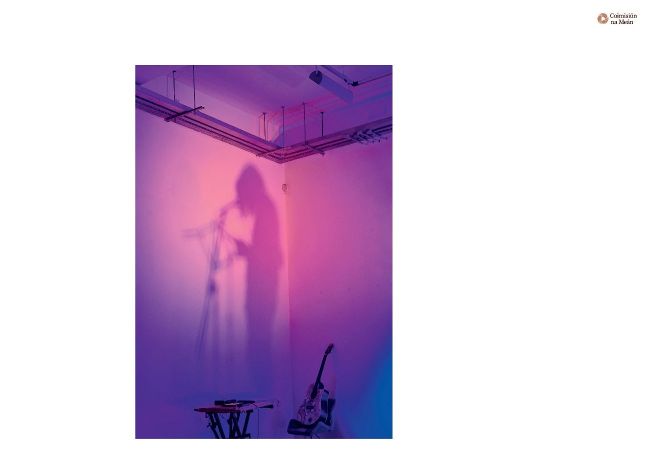
Queer creatives are integral to the arts industry, both in Ireland and the world over. But for those like Alex Cregan who live in smaller cities and towns, it’s becoming increasingly difficult to thrive in the sector.
Photo by Alex Cregan.
This cycle of harm can be upheld by arts organisations, government bodies, corporations, or even other freelancers, leveraging the disparity they benefit from due to institutional support, postcode lottery or social privilege for their own gain. This culture often aims to pit us against one another, to tear each other apart in order to move further up an unseen pyramid of opportunity, one which would shut out collaborators and kin who lifted us to this place to begin with.
This is further complicated for queer creatives. We are most likely to be exposed to or disadvantaged by unfair working environments, with a staggeringly high rate of unemployment due to growing discrimination under the current political climate. This means that many queer creatives who want to seek more stable employment may be unable to due to barriers to inclusion in the average full-time job.
Even so, questions get flagged by LGBTQ+ creatives that otherwise are left ignored by our cisgender heterosexual counterparts: Who do I report discrimination to if I am a freelancer? What if I do and the concern isn’t taken seriously? What if the tiny arts space I’m working in has no HR, no chain for reporting abuses? Who is there to protect me and my work? If getting to use a space enables me to make work, and I need to know someone to use a space, what do I do if I know no one? What do I do if the person I need to know dislikes me for being visibly queer in ways I can’t mask? What can be done to remove the barriers to entry for people like me? By asking these questions, unfortunately LGBTQ+ people often act as a canary in a coal mine for wider concerns about discrimination and abuse.
These questions are being addressed on a grassroots level by the emerging LGBTQ+ creative community in Derry. While still in its infancy, many attribute its coalescence to one of three events: The Pride Monologues (hosted by Sole Purpose Productions annually), the formation of Visual Artists Collective (hosted by Devin Kane and Serena Kane when they have the capacity) or the formation of the Queer Writers’ Circle (hosted monthly by myself).
Importantly, all of these have, intentionally or unintentionally, become incredibly trans+ centric and trans+ led, with a strong co-design driven heart to the projects in question, leading to more drive for every queer creative involved. These three points have led to the spawning of even more art: Not Your Pity Party, Affirmative Trans-Action and A Derry Queer Open Mic, to name just a few.
The ethos behind what has developed is simple; we make art, we spread the word, we lift one another up and we keep the door open for whoever might need it. Where we can, we share opportunities, we introduce one another to our people, we don’t gatekeep funders or methods. It is not a flawless system, and we do make mistakes, but there is a beauty in the ability to acknowledge that too.
Affirmative Trans-Action is an event I believe highlights everything that encompasses this new era of queer creatives in Derry. It was an evening of multidisciplinary art organised by Devin Kane and their community to raise money for Kane’s top surgery.
The evening, which was held in The Playhouse’s gallery space, was eclectic. As the night morphed from spoken word performances and poetry by trans writers to acoustic music by some strong allies to powerful work-in-progress theatre, the energy that spread and built throughout the night was contagious. Altogether, between ticket sales, the raffle and badges bought, Affirmative Trans-Action raised over £600 towards Kane’s surgery. This night was volunteer run, with The Playhouse offering the space in kind, performers donating their time and visual artists donating their art to be raffled.
Bluntly, this number barely makes a dent towards Kane’s surgery costs, but any number helps to lighten the load. Kane and their community plan for Affirmative Trans-Action to continue past this year and to metamorphose, providing support to any person who needs it to access gender-affirming care.
There is intense demand for this, which, in many ways, highlights a further struggle for LGBTQ+, specifically transgender, creatives in the North-West. The NHS waitlist for Brackenburn Clinic (the only gender identity clinic in the North) is estimated to be 41 years long according to an investigation done by researcher Claire Prosho, with many transgender people feeling forced to pay out of pocket or wait decades to exist in bodies that are congruent with their identities. This, combined with the job insecurity and lack of funding that is typical of the sector, puts many trans artists in the position where they can’t afford life-saving care without fundraisers or the kindness of their communities.
While communal support can be important, the reliance that trans and queer people, especially in the arts, have on this support can leave them vulnerable, whether to exploitation or abuse or financial insecurity, it’s all the same.
Many questions remain unanswered, most of all how to fix these overwhelming problems with no institutional power between us. An arts sector that uplifts queer voices, that decentralises funding from certain locations, and that allows people to live, needs to be built, that much is clear.
What is being attempted here, an artistic community that provides peer support, shares resources, and shows up for one another, is just one model that is making ripple effects into our wider artistic community. The impact of amplifying the voices and work of creatives who otherwise would never be seen or heard is real. By opening the door to this creative world of work to LGBTQ+ people, we are communicating to the wider sector that we are here, that art can be something so much wilder than normalcy would have you believe, and that even if we are ignored, we won’t go anywhere.
This article is part of GCN’s new Amach le Bród (Out with Pride) series, to combat anti-LGBTQ+ misinformation and platform underrepresented voices. The project was funded by the Coimisiún na Meán News Reporting Scheme.