COPIED
4 mins

[Music Makers]

Electronic music has been a staple in LGBTQ+ communities across the globe since its inception. After all, as Nicolas Prince notes, the genre and many of its subgenres were pioneered by queer people, with creation stories rooted in the underground Black and Latin queer communities.
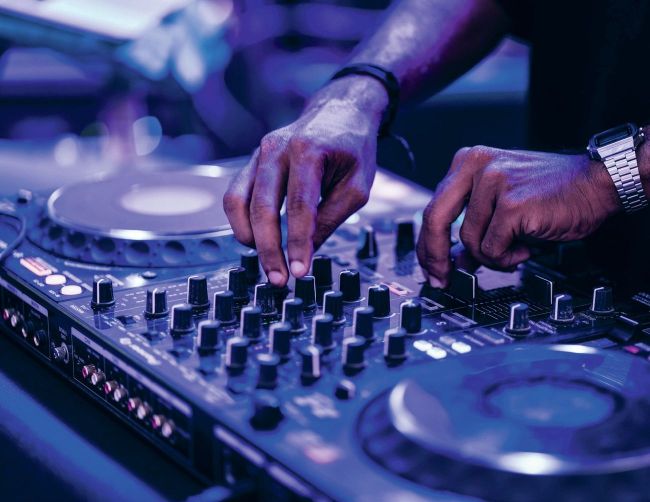
Genres of music that we now know as disco, house, and many others, were being invented as the 1960s came to a close and as the 1970s geared up to introduce an unparalleled cultural shift alongside the monumental Stonewall riots and queer revolutions alike. Discothèques were brought to the US from France in 1960, and despite being known more simply as ‘clubs’ today, they lent their name to a timeless genre of music. Disco music gained significant traction in the late ‘60s, thanks in no small part to the United States’ growing counterculture at the time. In the wake of the ever-unpopular Vietnam War and the liberating success of the Civil Rights Movement, American society was changing rapidly. While the rebellious hippies faded away around the turn of the decade, utilising music as another form of rebellion was only getting started.

New York was the centre of disco clubs, with venues like Studio 54 still holding renown long after the genre’s heyday. Two local DJs in the scene were friends Larry Levan and Frankie Knuckles, both of whom were Black gay men who were creating music that had never been heard before. Through the exploration of synthesisers, drums, and experimental editing, the pair were revolutionising the nightlife scene. Later in the ‘70s, Knuckles brought his musical brilliance to Chicago, the heart of America’s Midwest. There, he became the resident DJ at the

Warehouse, a new club rapidly rising in status.

The Warehouse was one of the very few clubs in the city that offered a welcoming atmosphere for queer people of colour. Knuckles, with his new sound and supportive patrons, popularised a genre that would ultimately be named after the drab building that housed their effervescent community. House music stood in direct opposition to the largely racist and homophobic ‘disco sucks’ slogan, as it celebrated and uplifted the voices that the American majority so desperately wanted to silence.

Throughout the ‘80s, different forms of electronic music were garnering attention around the world, most notably in Europe with the rise of acid house in the UK. Not only were disco and house pioneered almost exclusively by LGBTQ+ people of colour, but their music drew largely from pre-existing genres like funk, soul, and Latin music, and developed alongside the R&B and hip-hop genres that are integral to communities of colour today.

However, the difference was that the European clubs that played electronic music were mostly attended by white, and frequently heterosexual and cisgender, patrons. The introduction of white audiences to electronic music is what thrust rave culture into the mainstream, with much of the instrumental work of queer people of colour becoming commodified by the same people who demonised it just years prior. While the LGBTQ+ community suffered greatly during the height of the AIDS epidemic, the masses danced to their music and turned their backs on their struggling neighbours. The true creators of the global phenomenon, legends such as Knuckles and Levan, were slowly being erased by the general public.

Electronic music has also played an immeasurable role in queer ballroom cultures, which can be traced back to the drag balls of the 19th century. One of the world’s first documented drag queens, William Dorsey Swann, was a formerly-enslaved Black man who lived in Washington, DC, and he frequently hosted secret gatherings for other queer people like himself. These drag balls continued in America throughout the ‘20s and ‘30s, and though they were racially integrated long before most of the country, Black patrons created their own balls after experiencing racism in what was supposed to be their safe space.

Thus, the Black and Latin ballroom scenes grew significantly in the ‘60s and ‘70s thanks to the creation of houses by drag queens Crystal and Lottie LaBeija. Ballroom culture has popularised many terms and symbols that tend to be synonymous with modern queer culture, such as voguing, drag, and, of course, electronic music. At these balls, music shapes the atmosphere and a variety of genres can be heard playing, including disco and house. The relatively fast beat of electronic music keeps the energy up and the crowds lively, a key component of underground balls which were formed out of the resistance and rejection of social regression. Electronic music was born out of a need to celebrate queer joy in the face of adversity and oppression. Even as more countries continue to expand LGBTQ+ rights, the fight for equality is far from over, especially in queer communities of colour.

Though history continues to work against the queer visionaries that began revolutions with their music, their legacies persist, not only in their art, but in the people who continue to honour their achievements in everyday life.

This article appears in 393

Go to Page View
This article appears in...
393
Go to Page View
gcn
FROM THE TEAM
Keep up to date across our socials: @gaycommunitynews
Reflections on Pride
The National LGBTQ+ Federation (NXF), publishers of GCN, are pleased to have the opportunity to once again update readers on recent developments in the advocacy and policy space.
ROAST BATTLE ROYALE
Following last year’s record-breaking Roast of Panti Bliss , a night of comedy, fundraising, and one of the Abbey Theatre’s fastest-selling shows to date, GCN is giving the people what they want and bringing the Roast back this Pride, bigger and bolder with a fresh, hilarious cast and a brand-new format. Please welcome to the stage, GCN’s Roast Battle Royale !
FRIEND OR FOE?
What do you think of when you hear the words best friend, partner or family? Most of us probably imagine our real-life counterparts, but as Anna Vichtova points out, a rising fraction of society sees things very differently.
A placetobelong
As part of GCN and Belong To’s ongoing collaboration to platform a new generation of LGBTQ+ voices in Ireland, Séamus McDonnell highlights the importance of having physical community spaces.
RUN WITH PURPOSE
The Irish Life Dublin Marathon returns in 2026, and GCN is recruiting a new team of runners to take on the challenge, with only one spot still available! Five dedicated individuals have already been selected, prepared to take on the 42.2km race in support of Ireland’s free, independent LGBTQ+ media.
DRIVING THE CONVERSATION
Klinefelter syndrome, or XXY, is a common but largely unknown genetic condition in which a baby is born with an extra X chromosome. Often considered part of the intersex spectrum, Alice Linehan spoke to Gareth Landy, a campaigner passionate about raising awareness.
Bi us, for us
For years, ANNA Kerslake longed for a place that celebrated and normalised bisexuality. In 2023, she took matters into her own hands and created the BI-Monthly social group.
A MOTHER’S LOVE
As anti-trans rhetoric continues to appear in parliaments, courtrooms, and public spaces, what the community needs now more than ever is allies. Mammies for Trans Rights are a shining example, and Chris Rooke spoke to one of the co-founders about their essential work.
READ WITH PRIDE
Children’s Books Ireland is proud to champion diverse and inclusive storytelling that best reflects the vibrancy and diversity of modern Ireland. Each year, the team proudly curates a collection of LGBTQ+ books for readers aged 0 to 18 in the Read with Pride guide, 10 of which are spotlighted here.
Save the Date!
Empowering our identities
Earlier this year, ShoutOut released a new resource created by and for LGBTQ+ neurodivergent people. Recognising the importance of this work, Emmet Mc Ardle spoke to the team to find out more. Photos by Salvador Gutiérrez .
TEACHERS' GROUP
Art is for Everybody
There is a joke shared by me and
Send love
Sky
Meditations on labour
Shanaia Kapoor sat down with the Wexford-native to discuss everything from queerness to class, and the crux of meaning-making when you’re good with your hands.
Recovery as resistance
As society continuously perpetuates several harmful beauty standards, many people feel under pressure to control their bodies in different ways. Having previously dealt with an eating disorder, Megan Devaney explains how recovery can be a powerful form of resistance.
THE SEARCH FOR SAFETY
From June onwards, international protection processes in Ireland are undergoing serious reforms with the enactment of the International Protection Bill 2026, giving effect to the measures of the European Union Migration and Asylum Pact. Oisín Kenny speaks with community groups about the potential impact of this act, the growing disconnect between wider public attitudes and populist political movements, and the need to combat misinformation amid shifting social, digital and political landscapes.
TAKING ACTION
With decade-long waiting lists, invasive assessments and refusals of treatment, trans healthcare in Ireland is broken, and these issues are symptoms of an outdated, centralised, pathologising system. To fill the void in providing life-changing care, the trans community and healthcare professionals joined forces to create Kindred Clinic Cork, Ireland’s first peer-led trans health service pilot. Beatrice Fanucci spoke to the team to find out more.
LOVE IN A COLD CLIMATE
This August, in a town where polar bears roam wild and the dark season is months long, Longyearbyen Pride returns for a three-day celebration in the Norwegian High Arctic. To find out more about the world’s northernmost Pride, Charlie Hayward spoke to the team in charge.
RESIST & PERSIST
In 2025, dykes of all diversities, alongside those who love them, took back the streets of Dublin for the first time in over 25 years, and filled them with protest, power and joy. Now, they’re ready to do it all again, and Chairperson Alice Linehan shares what to expect.
MARCHING ON ON ON ON ON
Bodily autonomy has always been a core demand and theme for Trans & Intersex Pride Dublin. As Founder Ollie Bell points out, the group was formed in 2018 after the historic ‘Yes’ vote to repeal the Eighth Amendment, the constitutional ban on abortion.
ONE STORY MANY VOICES
Dublin Pride will host its annual festival this June, with a fabulous range of events taking place all across the city. The organisation’s Creative and Cultural Lead, Colm Molloy , shares further insights into the theme, branding, grand marshal and events for 2026.
A new approach
Following the liquidation of the company behind Cork Pride in 2025, a community group, Cork Community Pride, emerged to take the reins, centring grassroots organising and a community-based approach. Sarah Fitz spoke to one of the organisers, Niamh Kennedy, to hear about the plans for this year’s festival.
PRIDE CALENDAR 2026
The 2026 Pride season is well and truly
FAB FORTY
As The George marks its 40th anniversary, Sarah McKenna Barry caught up with some of the drag artists and DJs that call the iconic LGBTQ+ venue home, as they reflect on the bar’s long and fascinating history.
DO IT FOR THE DANCE
Mother Pride Block Party returns to Collins Barracks this June with a fabulous two-day celebration. Ahead of the unmissable event, Ailo James Kerr spoke to three of the lineup’s most exciting local DJs.
PLEASURE & POLITICS IN THE PIT
Pride parties are nothing without electrifying artists, and that’s the best way to describe the force of nature that is Peaches. Brian Dillon spoke to the Canadian hitmaker before she makes her return to Dublin with a DJ set at Mother Pride Opening Party, just weeks after her show at The Academy.
FINDING OUR RHYTHM
When two friends found a gap in Dublin’s nightlife scene for queer people of colour, they decided to create Aphrodisiac, a unique space championing representation and acceptance. Michaiah Johnson spoke to Co-Founder Jhonnie about the organisation, and why it is so special for so many people.
50 YEARS AT FULL THROTTLE
For five decades, Dykes on Bikes have used their presence as a marker of bravery, visibility, diversity and empowerment. Nicole Lee charts some of the group’s history and chats to the Melbourne chapter about the work they do.
Documenting care _in Dublin’s queer nightlife
Keelin O’Shea is a Dublin-born and Dublin-based documentary
Discover hidden histories and fresh perspectives!
THE BEAUTY OF OVERCOMING
James Mac is an internationally acclaimed makeup and drag artist, photographer, and hairstylist, with a background in sports and a passion for advocacy, making him quite the Renaissance human. Conor O’Doherty spoke to James while he was home in Laois, surrounded by signs of his heritage and upbringing.
your trash my treasure
SMUT Press is a London-based, Irish-run, queer publishing project and party platform. In coincidence with the release of their latest publication, Cruising Archaeology II: Eurotrash , Alice Linehan sat down with founders Jack Scollard and Jordan Hearns to learn more about their work.
Pride, pleasure & protection
Pride is a time of connection, celebration and community. As Pádraig Burke notes, for many, Pride also includes travel, nights out, meeting new people, reconnecting with chosen family, intimacy and sex.
PUNK IN PRACTICE
In April 2026, Jack Haven, Mina Walker and Peter Nolan Smith travelled to Dublin for the European premiere of their film October Crow at the Trans Image/Trans Experience (TITE)Festival. Programmer and Guest Co-Ordinator Liadán Roche interviewed the trio after the screening and during a separate meeting in Outhouse, to learn more about the production and their filmmaking ethos.
Tender Migrations
Queer Spectrum Film Festival returns in 2026 to showcase migrant and QPoC journeys through desire, transition and healing. To tell us more, Founder, Director and Programmer Pradeep Mahadeshwar dives into the programme.
Ag foghlaim le chéile
In July 2024, Ireland’s first Gaeltacht camp for LGBTQ+ adults launched in Cléire, off the coast of Cork. Spearheaded by AerachAiteachGaelach, the group’s director Eoin Mc Evoy is on hand to tell us more.
[Music Makers]
Electronic music has been a staple in LGBTQ+ communities across the globe since its inception. After all, as Nicolas Prince notes, the genre and many of its subgenres were pioneered by queer people, with creation stories rooted in the underground Black and Latin queer communities.
Directory
Dublin & The East Acting Out Performance group
Directory
Cork, Kerry & The South Choral Con Fusion
An almost forgotten history
Born in Sligo in 1870, Eva Gore-Booth was an Irish poet, theologian and dramatist, as well as a committed suffragist, social worker and labour activist. Sarah Creighton Keogh traces through her often overshadowed story, and her involvement with the Urania journal.
A CAUSE FOR CELEBRATION
As she turns 80, Ailbhe Smyth hasn’t lost any of her political agency and unquenchable desire to right social injustice wherever she sees it. Tonie Walsh recently sat down with the activist to take stock of a full and noble life.
THE FRONT LINES OF RESISTANCE
According to the Global Peace Index, Ireland is the second safest country on the planet. This is largely thanks to our longstanding commitment to military neutrality; something many of us consider to be a defining trait of our national identity. But as Kelly Earley points out, this could all be at risk.
The INMO wish you a Happy Pride 2026
FOR ALL YOUR CEREMONY NEEDS SEE YOU AT PRIDE ACROSS IRELAND!
FIGHTING FOR OUR FAMILIES
I t’s been 11 years since Ireland voted
Looking for back issues?
Browse the Archive >

Previous Article Next Article
393
CONTENTS
Page 118
PAGE VIEW